
![Can You Play Online Poker in Texas? [2026 Legal Guide + Safe Options]](https://texaspoker.club/wp-content/uploads/2026/07/can-you-play-online-poker-in-texas-hero-1100x450.jpg)
Short answer: yes. Texas has no regulated real-money online poker, and no licensed domestic site will accept you. But two routes remain open to players in the state: sweepstakes poker platforms, which operate under promotional law rather than gambling law, and offshore real-money rooms, which accept U.S. players from outside the regulatory system.
The two work very differently, and it pays to know how before you sign up to either. This guide covers the legal position, what each route actually involves, and the trade-offs of both.
This article is general information, not legal advice. Gambling law changes, and if your situation is complicated, talk to a lawyer familiar with Texas gaming law.
What Texas law actually says
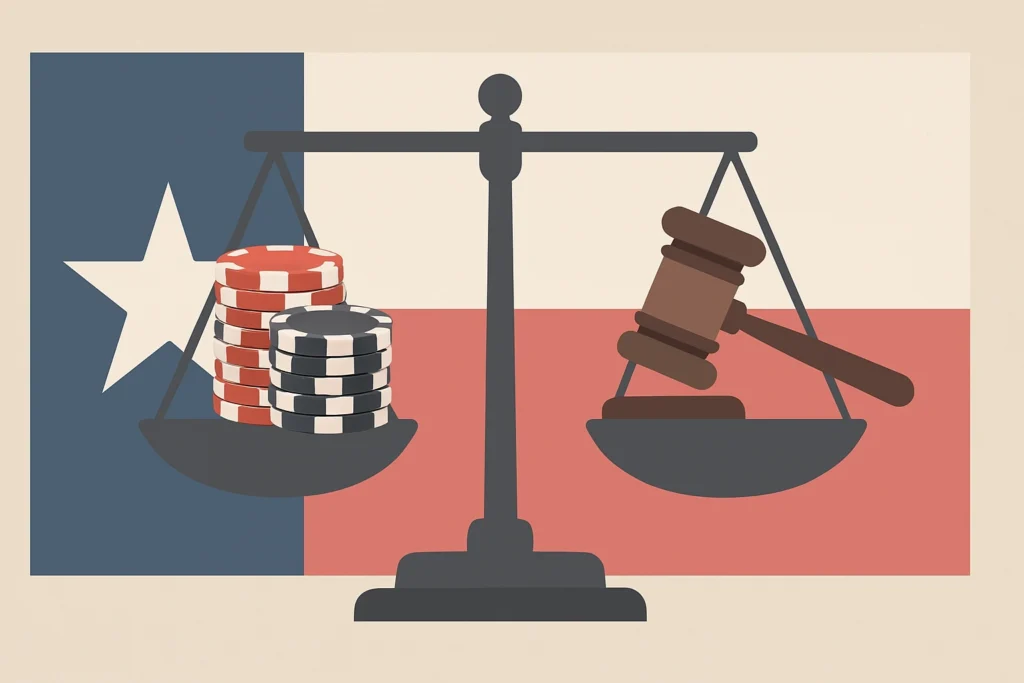
Texas Penal Code Chapter 47 is the relevant law, and the important thing about it is who it targets. The serious offenses concern keeping a gambling place (Section 47.04), promoting gambling (Section 47.03) and operating a gambling business. These are aimed squarely at the people running the operation.
Simple participation is treated differently. Betting is a Class C misdemeanor, the lowest tier in Texas law, and Section 47.02 provides a defense where the gambling occurred in a private place, no one received an economic benefit beyond their own winnings, and the risks and returns were the same for all participants. This is the provision that has historically protected private home games.
What Texas law doesn’t do is create a mechanism for licensing online poker. There is no regulator and no application process, so a legal domestic operator can’t exist. That absence is why your options look the way they do; nothing in the statute singles out players.
Why regulated U.S. sites won’t accept you
States including Nevada, New Jersey, Michigan and Pennsylvania run licensed online poker. Their operators are required to confirm you’re physically inside state lines, which they do with geolocation software that checks your IP address and GPS.
This means the following sites are unavailable in Texas:
- PokerStars US
- WSOP.com
- BetMGM Poker
- partypoker US
These sites block Texas because their licenses force them to. An operator that accepted players outside its licensed states would jeopardize the license itself, so there is no prospect of these sites opening up until Texas passes its own legislation.
Option 1: sweepstakes poker
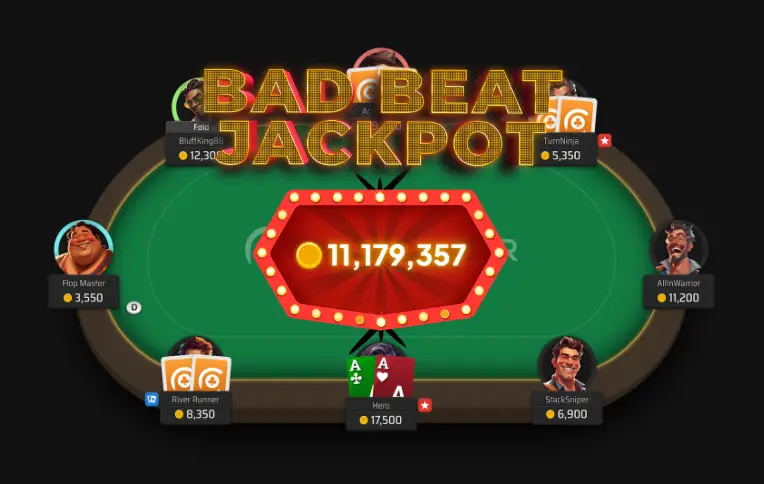
Clubs Poker runs under sweepstakes law, the same legal structure behind fast-food prize games and magazine draws. It long predates online poker and has nothing to do with gambling statutes.
Gambling generally requires three elements together: consideration, chance and prize. Remove any one and the activity falls outside the definition. Sweepstakes promotions remove consideration by never selling entries and always providing a free route in. That is why every such promotion carries a mail-in option and the phrase “no purchase necessary.”
Applied to poker, this produces a two-currency system:
- Gold Coins (GC) are sold, used for standard play, and redeem for nothing
- Sweeps Coins (SC) are never sold, arriving free through bonuses, daily rewards or mail-in entry, and winnings from SC tables can be redeemed
What this gets you in practice:
- A legal structure that doesn’t depend on regulatory tolerance
- No deposit required to play at all
- Daily login rewards of 2,000 GC and 0.50 SC
- Texas Hold’em and Omaha, plus a casino section with dozens of slot titles and table games including blackjack
- Browser-based access on mobile and desktop with nothing to install
- Prize redemption after identity verification
New players get 200,000 Gold Coins plus 40 free Sweeps Coins for $20. The catch: stakes are capped well below what a serious player wants, and free Sweeps Coin accumulation is slow.
Play sweepstakes poker at Clubs Poker »
No Purchase Necessary. 18+. Void Where Prohibited. See Terms & Conditions.
Option 2: offshore real-money poker

Ignition Poker is licensed in Curaçao and accepts players from Texas without geoblocking. It offers real-money cash games, multi-table tournaments, Sit n’ Gos and jackpot formats, with a welcome bonus of up to $3,000 on crypto deposits or $1,500 through standard payment methods.
Its distinguishing feature is anonymous tables. Screen names are hidden, which prevents opponents from tracking your play across sessions and makes the games harder for professionals to attack. That tends to keep the field softer than equivalent stakes elsewhere.
The risks need spelling out. Curaçao licensing imposes far lighter obligations than U.S. state regulators, particularly around player fund segregation. If a dispute arises over your balance, you have no U.S. regulator to complain to and no practical legal recourse. Payment processing can be slow or unreliable, which is why crypto is the recommended method. And while individual participation isn’t what Texas law targets, you’re dealing with an operator outside the U.S. system entirely.
None of this makes offshore poker unusable, and a great many U.S. players have used these sites for years without problems. It does mean you should treat your balance there as money at risk and withdraw regularly instead of leaving a bankroll parked on the site.
Play real-money poker at Ignition »
Which one suits you
| If you want | Choose | Because |
|---|---|---|
| No financial risk, clear legal footing | Clubs Poker | Free to play, prize redemption, sweepstakes structure |
| Real stakes and deeper games | Ignition Poker | Actual cash, anonymous tables, crypto payouts |
| The strongest games available | A Texas card room | Rake-free club play, covered in our guide to Texas poker rooms |
Plenty of players use more than one. Sweepstakes poker works for casual volume on a phone, offshore accounts for serious sessions, and live club games when you want the best structural edge available in the state.
The live option is often the best one
It’s easy to forget that Texas has a large legal live poker scene. Private membership clubs across Austin, Houston, Dallas and San Antonio operate by charging membership and hourly seat fees instead of raking pots, which keeps them outside the definition of a gambling business.
For a winning player, this is the strongest option on the page. Rake is the largest cost most low-stakes players face, and removing it entirely changes the math of the game more than any bonus offer will.
Playing responsibly
Both platforms offer tools for setting deposit and session limits, and both require identity verification before paying out. Do the verification early, before you have a withdrawal riding on it.
The usual advice applies with more force offshore than domestically: only put in money you can afford to lose, take winnings out as you go, and stop if it stops being enjoyable. If gambling is becoming a problem, the National Council on Problem Gambling runs a confidential helpline on 1-800-522-4700.
Frequently asked questions
Is it illegal to play online poker in Texas?
Playing isn’t what Texas law targets. Chapter 47 reserves its serious offenses for people who operate gambling businesses, promote gambling or keep a gambling place. Betting itself is a Class C misdemeanor, and Section 47.02 provides a defense for private-place gambling where nobody profits beyond their own winnings. There is no Texas law specifically criminalizing an individual for playing poker on an offshore or sweepstakes site.
Why can’t I use PokerStars or WSOP.com in Texas?
Those operators are licensed by individual states such as New Jersey, Nevada, Michigan and Pennsylvania, and their licenses require them to confirm you’re physically inside the licensed state. They use geolocation to enforce it. Accepting a Texas player would put the license at risk, so blocking Texas is the price of keeping the license.
Are sweepstakes poker sites actually legal in Texas?
Yes, because they are structured to fall outside gambling law entirely. Gambling generally requires consideration, chance and prize together. Sweepstakes promotions remove consideration by never selling prize-eligible entries and always offering a free route in, such as mail-in entry. This is the same legal structure used by fast-food prize games, and it predates online poker by decades.
Can I win real money on a sweepstakes poker site?
You can win Sweeps Coins, which are redeemable for cash or gift cards once your account passes identity verification and you clear the minimum redemption threshold. You can’t buy Sweeps Coins directly. They arrive as free bonuses attached to Gold Coin purchases, through daily login rewards, or by mail-in entry.
Is live poker legal in Texas?
Yes. Private membership card rooms operate across Austin, Houston, Dallas and San Antonio by charging membership and hourly seat fees instead of taking a cut of each pot. Because club revenue is unrelated to the money wagered, the room isn’t profiting from gambling in the sense Chapter 47 prohibits.
Do I have to pay tax on poker winnings in Texas?
Poker winnings are taxable income at federal level regardless of where you play, including live club games where nobody issues you a form. Texas has no state income tax, so the federal obligation is the one that matters. Keeping a session log is the practical way to support your filing position.
Where that leaves you
Texans can play online poker in 2026. There is no regulated domestic option and no realistic prospect of one arriving soon, but sweepstakes platforms offer a legally clean route with a real prize element, and offshore rooms offer real stakes at the cost of operating outside U.S. regulation.
Choose based on how much you intend to have on the platform at any given time. If the answer is very little, either works. If the answer is a real bankroll, the trade-offs deserve more thought than a welcome bonus should buy.